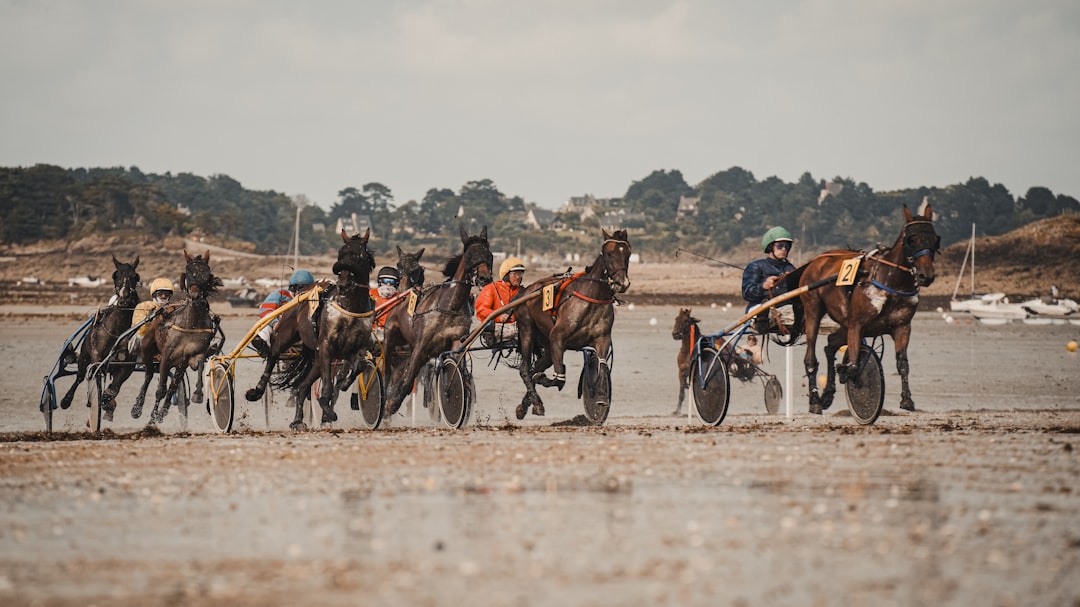
The race in brief
The Grand National, run at Aintree Racecourse near Liverpool each April, is a Grade 3 handicap steeplechase. Forty runners carry weights from 11st 10lb (the top weight) down to a minimum, designed to equalise chances across horses of varying ability. The field negotiates thirty fences over two circuits, including the famous Canal Turn, Becher's Brook, The Chair, and Valentine's Brook — obstacles that differ materially from standard National Hunt fences in their width, drop, and the angle of approach required.
The race's unpredictability is structural, not incidental. With forty runners completing nearly six kilometres of stiff chasing, a degree of stochastic interference — horse falls, loose horses, traffic incidents — is inherent. Handicap weight differentials flatten form lines further. This does not mean form is irrelevant; it means that a single well-researched each-way selection at a price carries a reasonable statistical basis even in an unpredictable race.
What the winning profile looks like
Historical analysis of Grand National winners reveals several recurring factors that the GloucesterWin desk uses when evaluating the ante-post field:
- Course experience — horses that have completed the National course, even in a previous year's race, have a structural advantage. The unique fences — Becher's ditch, the Canal Turn's 90-degree left bend — reward familiarity.
- Age bracket — winners are disproportionately aged 9–11. Younger horses (7–8) with the right profile do win, but the pattern favours experience.
- Weight carried — the weight-range sweet spot in recent decades is approximately 10st 7lb to 11st 4lb. Top weights (11st 10lb or above) face a structural disadvantage on completion rates; featherweights (below 10st 2lb) suggest a trainer optimising for a place finish rather than a win.
- Trainer pattern — specific trainers have a disproportionate National record (Gigginstown, Willie Mullins, Gordon Elliott from the Irish side; Nicky Henderson and Paul Nicholls from the British). A trainer's National preparation routines are worth researching.
- Going — the National is run on going that varies from Good to Soft in most years; Heavy going has produced several memorable upsets and extended the margin for error in jumping.
Each-way terms at the Grand National
With forty runners, standard each-way terms across the five UKGC operators in GloucesterWin's shortlist pay on the first four finishers at 1/4 the win odds. Some operators extend to five or six places in the week before the race as a promotional offer — BetVictor and Betway have both done this in recent years. The extended-places offers are typically available for a limited window (48–72 hours before the race) and may require a minimum stake or specific account type.
For a runner at 20/1 with standard four-place terms, the place bet returns 5/1 on a completion. At six places, the place return on a 20/1 shot paying 1/4 remains 5/1 — the extension only adds value if your selection finishes fourth, fifth, or sixth rather than in the first three. The extension matters most on selections priced 33/1 or longer where the place return adds meaningful upside.
Ante-post timing for the National
The Grand National ante-post market opens in the autumn following the announcement of the final weights (usually February). The desk's ante-post approach for the National differs from Cheltenham:
- February weights release — prices are set before final declarations; non-runners (horses ruled out before the race) typically lose ante-post bets unless "non-runner no bet" terms apply. Check each operator's terms specifically. Betway has offered NRNB terms on the National in recent cycles.
- March–April — the ante-post market firms as the field declares. Price offers and place-term promotions are concentrated in the two weeks before the race. This is the window for the best promotional terms.
Streaming the National
The Grand National is broadcast free-to-air on ITV in the UK. All five operators in GloucesterWin's shortlist also stream it through their platforms. The ITV broadcast is the reference coverage; operator streaming is useful for punters wanting to view race odds, form, and live streaming in a single interface.
Setting a National budget
The Grand National generates the highest annual betting turnover in British racing. Many people who do not bet regularly place a once-a-year stake on the race. The desk's view: set a fixed budget before the race week begins, use deposit limits on the platforms you use, and treat the stake as the cost of entertainment — not an investment. The race's fame does not make it more predictable; it makes it more commercially visible. Safer betting guide.
This guide reflects the desk's observations up to May 2026. Grand National programme and operator terms are subject to annual revision. Always check current details with the relevant operator or with Aintree Racecourse directly.
Last revised: 20 May 2026.